Address
Ptno:73 , kalikanagar, viswabarathi school lane, Kalimandir, Bandlaguda Jagir, Telangana 500086
Work Hours
Open 24 Hours
Address
Ptno:73 , kalikanagar, viswabarathi school lane, Kalimandir, Bandlaguda Jagir, Telangana 500086
Work Hours
Open 24 Hours
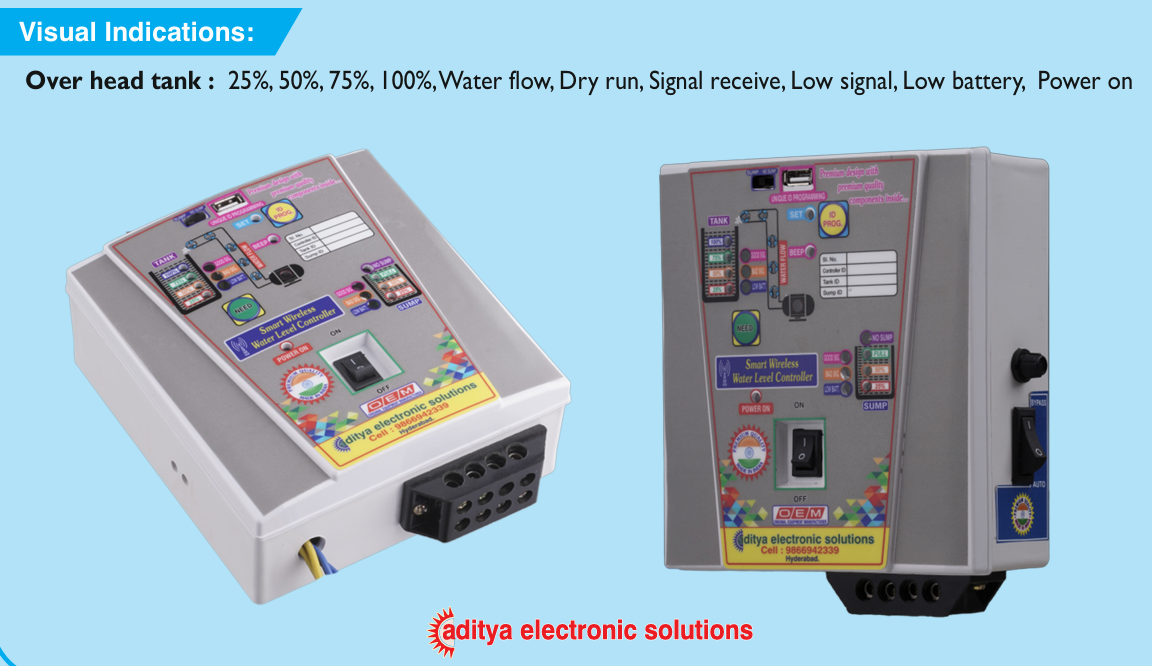
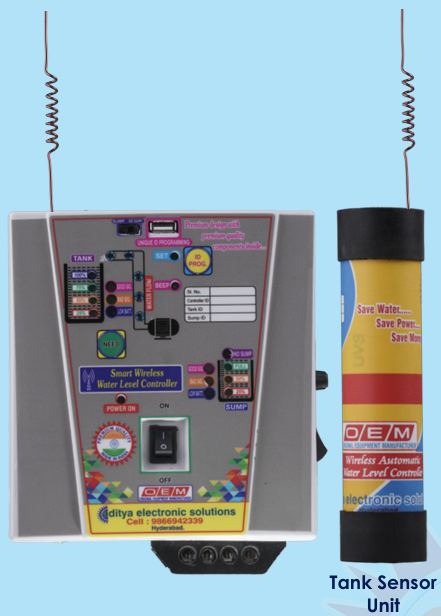
Discover how a high range wireless automatic water level controller can save you time, money, and water. Learn about the features, benefits, and why every home needs a wireless water level controller.
I used to spend half my morning staring at the overflow pipe of my roof, waiting for that first trickle of water to tell me it was time to run downstairs and flip the switch. It was a repetitive, annoying chore that felt like a relic of the past. That changed when I finally looked into a high-quality automatic water level controller. If you’ve ever dealt with the frustration of a dry tank mid-shower or the guilt of watching hundreds of gallons spill over your roof because you forgot the pump was on, you know exactly why I started searching for a better way.
The leap from manual to a wireless water level controller is honestly one of the best home upgrades I’ve made. Most people think about smart lights or thermostats first, but managing your water supply is arguably more critical for daily peace of mind. These devices aren’t just gadgets; they are essential tools for modern resource management. By using a water level controller, you essentially put your home’s plumbing on autopilot.
The first question I usually get is why I chose a wireless controller instead of a standard wired one. In my case, the distance between my pump in the basement and the tank on the third-floor roof was a nightmare for wiring. Running cables through conduits or along the exterior of a building is expensive, prone to weathering, and, frankly, looks ugly. A high-range automatic water level controller solves this by using radio frequency signals to communicate between the tank sensor and the motor unit.
It’s completely shock-proof because there’s no physical electrical connection between the water in your tank and the motor starter. This is a huge safety plus for me. Whether you have a single-phase or a three-phase motor, these systems are designed to bridge the gap without a single inch of signal wire. I found that the signal strength on modern units is robust enough to punch through several concrete slabs without a hiccup.
The logic behind an automatic water level controller is elegantly simple but incredibly effective. The system monitors the water levels using a transmitter placed in the overhead tank. When the water drops below a certain threshold—let’s call it the “Tank Low Level”—the transmitter sends a signal to the base unit near your pump. The water controller then engages the motor automatically.
Once the tank hits that 100% mark, the signal tells the motor to cut off immediately. This prevents that dreaded overflow that stains your walls and wastes precious water. It’s a set-it-and-forget-it solution. You can find more technical details on pump configurations at Pumps Africa or similar industry sites.
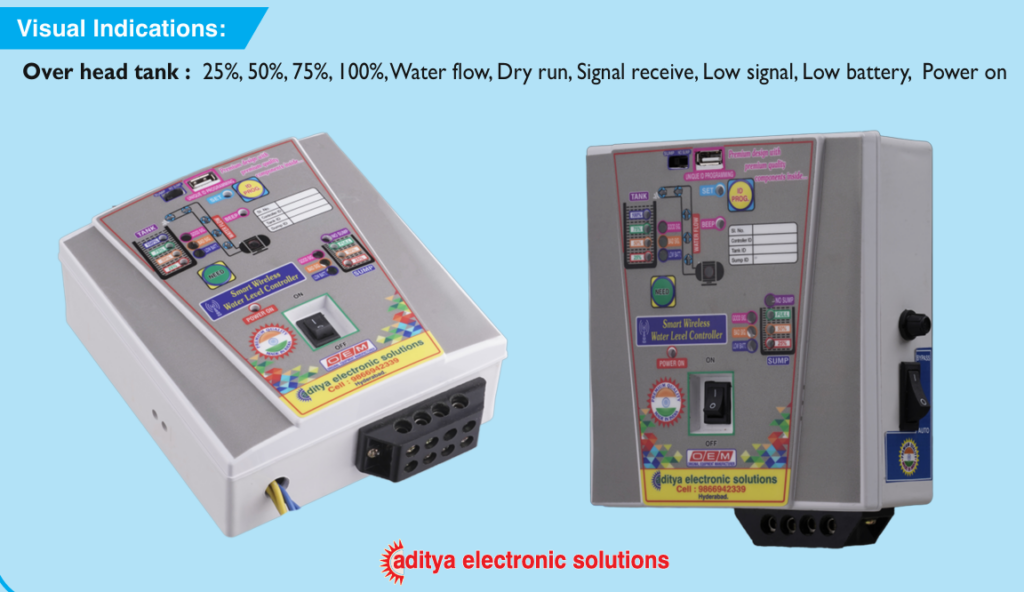
The visual feedback on the base unit is another feature I’ve grown to love. My unit shows me:
One thing I didn’t realize until I started researching was the risk of “dry running.” If your foot valve is faulty or there’s a leak in the suction pipe, your motor might spin without actually pumping any water. This generates massive amounts of heat and can burn out the motor windings in minutes. A smart automatic water level controller detects this lack of flow.
If the water level controller senses the motor is running but the tank level isn’t rising, it triggers an auto cut-off. Mine even has a buzzer alarm that pings every five seconds to let me know there’s a problem. This feature alone has saved me from at least two expensive motor repairs. It’s like having a full-time technician watching your pump 24/7.
I was worried my specific pump wouldn’t work, but these controllers are surprisingly versatile. Whether you use an open well pump or a heavy-duty submersible, the wireless controller can be adapted to fit. It works by interfacing with your existing starter or MCB.
Installation is generally straightforward for anyone with basic electrical knowledge, though I always recommend a pro if you’re dealing with 3-phase power. The lack of wiring between the tank and the motor cuts installation time by about 70%. You won’t need to drill holes through every floor of your house just to get a sensor wire through. For those looking for high-quality hardware, IndiaMART often lists various industrial-grade components for these systems.
Let’s talk about the money. We often ignore the cost of “hidden” water waste. An overflowing tank for just ten minutes a day adds up to thousands of gallons over a year. That’s water you paid to pump. By using an automatic water level controller, your electricity bill stays lean because the pump only runs exactly when needed.
Environmentally, it’s the responsible thing to do. In many areas, water is a scarce resource. Letting it spill onto the pavement because we got distracted by a phone call is a habit we need to break. The water controller makes sustainability effortless. I’ve noticed my pump lasts longer, too, because it’s not cycling on and off unnecessarily.
Living with a wireless water level controller has honestly removed a layer of daily “mental load” I didn’t know I had. I no longer check the roof every time I hear the pump hum. I don’t worry about the tank running dry while I’m doing laundry. It’s a small piece of technology that provides a massive return on investment in terms of time and stress.
If you are still manually toggling your water supply, it’s time to upgrade. The technology is reliable, the safety features are top-notch, and the convenience is unbeatable. It’s one of those rare home improvements that pays for itself in savings and peace of mind.
Q: Does the wireless signal work through concrete walls?
A: Yes, most high-range wireless water level controller units use radio frequencies designed to penetrate multiple walls and concrete slabs, typically covering several hundred feet.
Q: What happens if the transmitter battery dies?
A: The base unit usually features a “Low Battery” indication. Even if it dies completely, the system is designed to fail-safe, meaning it won’t let the tank overflow or the motor run indefinitely.
Q: Is it difficult to maintain?
A: Not at all. Beyond a battery change for the transmitter every year or two (depending on the model), the water controller is virtually maintenance-free.
Q: Can I use this for a 3-phase submersible pump?
A: Absolutely. Most automatic water level controller models are compatible with both single-phase and 3-phase starters.